Magnetic Resonance Imaging (MRI) is one of the most powerful diagnostic tools in modern medicine. Unlike X-rays or CT scans, MRI uses magnetic fields and radio waves — no radiation — to create detailed images of soft tissues, organs, the brain, spine, and joints.
But when exactly should you get an MRI? Here are ten common reasons your doctor may recommend one — and what to expect at AV Scan Diagnostics in Dadar West, Mumbai.
1. Persistent or Severe Back Pain
If you have back pain that doesn't improve with rest or physiotherapy after several weeks, an MRI of the spine is often the next step. MRI can show disc prolapse (slipped disc), nerve root compression, spinal stenosis, or other structural causes that X-rays cannot reveal.
2. Knee, Shoulder or Joint Pain with Suspected Ligament Injury
MRI is the gold standard for assessing soft tissue injuries — ACL and PCL tears in the knee, rotator cuff tears in the shoulder, meniscus injuries, cartilage damage, and ligament sprains. If you've had a sporting injury or a fall and your symptoms persist despite conservative treatment, your orthopaedic surgeon will likely request an MRI.
3. Neurological Symptoms — Headache, Dizziness, Numbness
Persistent unexplained headaches, recurring dizziness, visual disturbances, numbness or tingling in the limbs, weakness, or difficulty speaking are all reasons to get a brain MRI. These can help rule out brain tumours, stroke, multiple sclerosis, vascular malformations, or other neurological conditions.
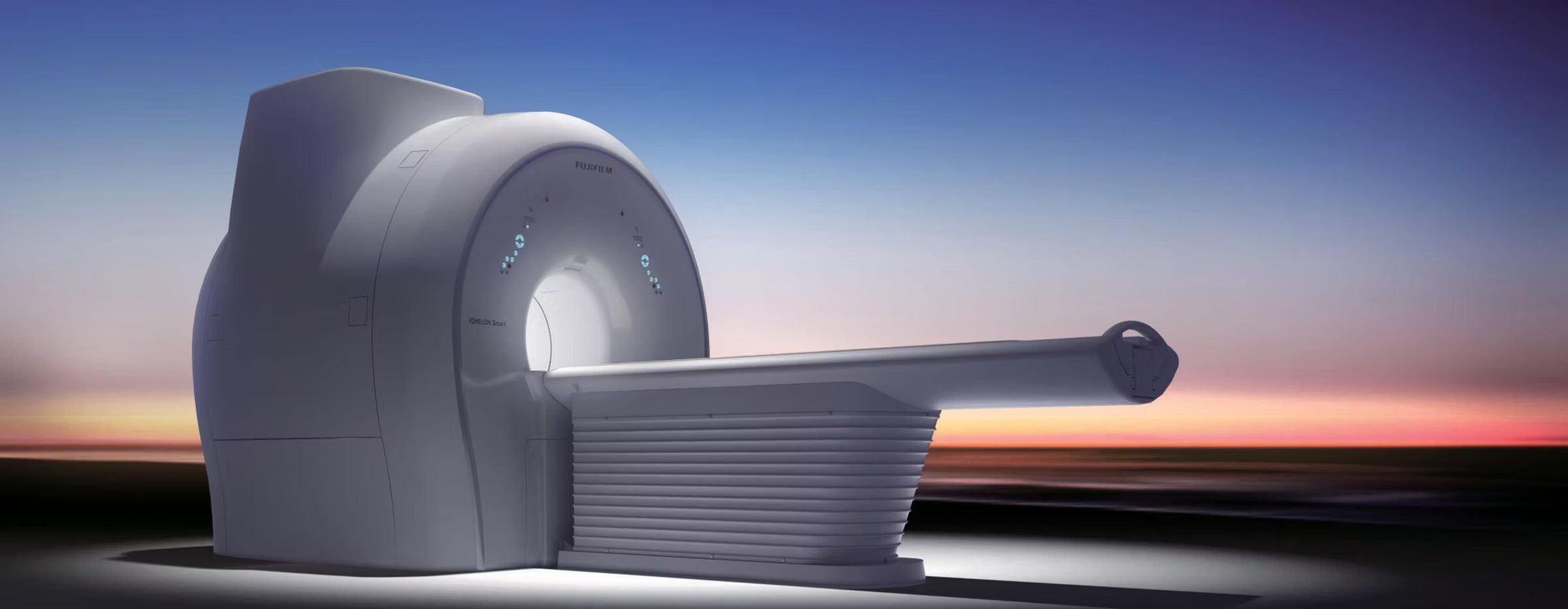
AV Scan's Fujifilm Echelon Smart MRI has quieter scanning (SmartCOMFORT noise reduction, up to 96%, manufacturer figure), to help patients who feel anxious about the scan.
4. Epilepsy or Unexplained Seizures
A brain MRI with a dedicated epilepsy protocol is essential for anyone presenting with new-onset seizures. It can identify structural causes such as cortical dysplasia, hippocampal sclerosis, or mesial temporal sclerosis that may guide treatment decisions.
5. Cancer Staging or Follow-Up
MRI is widely used for cancer staging — particularly for prostate cancer (multiparametric MRI), breast cancer (breast MRI), liver lesions (dynamic contrast-enhanced MRI), rectal cancer, and cervical cancer. It is also used for follow-up after treatment to assess response.
6. Abdominal or Pelvic Pain
When ultrasound findings are inconclusive, MRI of the abdomen or pelvis provides a detailed assessment of the liver, kidneys, uterus, ovaries, and other pelvic structures. MRCP (MR Cholangiopancreatography) gives a detailed view of the bile ducts and pancreas without any contrast injection.
7. Breast Concerns — High-Risk Screening or Implant Assessment
Women at high risk of breast cancer (due to genetic factors or family history) may be recommended breast MRI as part of their annual screening. MRI is also the best method for assessing breast implant integrity.
8. Fetal Assessment (Fetal MRI)
In some pregnancies where ultrasound findings raise concern about fetal brain or body abnormalities, a fetal MRI provides a more detailed assessment. This is typically performed after 20–22 weeks and is entirely safe.
9. Pre-Surgical Planning
Surgeons often request MRI before operating to understand the precise anatomy and extent of disease — especially for brain tumours, spinal conditions, or complex joint surgeries.
10. When Your Doctor Says "We Need to Rule Something Out"
MRI is often the investigation of choice when a doctor wants to rule out serious pathology in a patient with persistent symptoms. It is non-invasive, uses no radiation, and provides detailed information across multiple organ systems.
Book Your MRI Scan in Dadar, Mumbai
AV Scan Diagnostics in Dadar West offers advanced MRI scanning on the Fujifilm Echelon Smart system — with every scan reported by our panel of sub-specialty radiologists. Call or WhatsApp us at +91 98200 51511.