At a Glance
| Also called | CECT abdomen, contrast CT abdomen, CT whole abdomen, CT scan of the stomach, triple-phase CT liver |
|---|
| Types | Plain CT, CECT (contrast injection) and triple-phase CT |
|---|
| Reported by | Dr. Avinash Bansal, MD (Radiology) |
|---|
| Preparation | If contrast is planned, usually no food for about 4 hours; water is fine. Confirmed on WhatsApp when you book |
|---|
| Time | Usually about 10-20 minutes in the scan room. Plan on about 1-2 hours at the centre if you drink oral contrast first or have an injection |
|---|
| Reports | Most reports the same day, sent to your WhatsApp |
|---|
| Price and cover | Price confirmed on WhatsApp before your visit; cashless with most major insurers and TPAs; CGHS, ECHS, MJPJAY |
|---|
| Hours and access | Mon-Sat 8am-10pm, Sun 8am-5pm; ground floor, step-free, near Shivaji Park and Siddhivinayak Temple |
|---|
What a CT abdomen and pelvis shows
CT uses X-rays and a computer to make thin cross-sectional pictures, usually from the bottom of the lungs down to the hips. Patients often call it a “CT scan of the stomach” (Hindi: पेट का सीटी स्कैन; Marathi: पोटाचा सीटी स्कॅन). It shows:
- Liver, gallbladder, bile ducts, pancreas and spleen
- Kidneys, ureters and bladder
- Stomach, bowel and appendix: inflammation, wall thickening or blockage
- Blood vessels, lymph nodes, hernias, fluid collections and abscesses
CT is not the first test for everything. Ultrasound (USG) comes first for gallstones, many of which do not show on CT, and gastritis, ulcers and small colon polyps are checked with an endoscopy or colonoscopy.
Plain CT, contrast CT (CECT) and oral contrast
Your prescription usually says which type your doctor wants, and our radiologist plans the scan from it.
- Plain CT: no injection. Used mainly for stones, calcification, some follow-ups, or when contrast cannot be given. A scan only for kidney stones is a separate test, CT KUB.
- CECT (contrast-enhanced CT): an iodine-based contrast is injected into an arm vein. It makes organs, blood vessels, inflammation, abscesses and masses much easier to see, so most scans for pain, infection or cancer use it.
- Oral contrast: for many scans you slowly drink water or a diluted contrast drink over about an hour, so the bowel stands out from nearby organs. Some scans need no drink. Our team tells you what to do.
What triple-phase CT means, and why it is done
Organs and lesions take up and wash out contrast at different speeds. In a triple-phase (multiphase) CT, the same area is scanned at set times after the injection. The phases depend on the organ and your doctor’s question; for the liver they are usually three or four of these:
- Plain images before the injection
- Arterial phase, roughly 30-40 seconds after the injection, when lesions with a rich blood supply light up
- Portal venous phase, about a minute after the injection, when the liver is brightest
- Delayed phase, a few minutes later, added when needed to show whether a lesion holds on to the contrast or washes it out
Comparing the phases helps to characterise a liver lesion seen on ultrasound (for example, telling a harmless haemangioma from a lesion that needs further tests), a new nodule in cirrhosis or chronic hepatitis B or C, or a pancreatic or kidney mass. Each extra phase adds radiation, so phases are used only when they add information. For small liver lesions or pancreatic cysts, MRI may give more information.
When doctors request a CT abdomen and pelvis
It is usually requested after your doctor has examined you, often after an ultrasound. Common reasons include:
- Persistent or unexplained abdominal pain
- Suspected appendicitis, diverticulitis, pancreatitis or an abscess (in children, ultrasound is usually tried first for appendicitis)
- A lump, or an abnormal sonography or blood test result
- Unexplained weight loss
- Cancer staging and follow-up (a CT chest can be done in the same sitting if needed)
- A suspected complication after abdominal surgery
Go to a hospital emergency department first, not an outpatient scan, if you have:
• sudden severe abdominal pain
• pain after an injury
• a hard, swollen, very tender abdomen
• vomiting blood, or black or bloody stools
• pain with high fever or fainting
How to prepare
This is general guidance. Our team confirms the exact preparation when you book on WhatsApp; if their instructions differ from this page, follow theirs.
- Food: if contrast is planned, usually no food for about 4 hours before the scan, but keep drinking plain water. A plain CT may need no fasting.
- Medicines: take your usual medicines, including blood pressure tablets, unless told otherwise. If you take insulin or diabetes tablets, ask your doctor how to adjust them while fasting so that your sugar does not drop too low, and bring a snack for after the scan.
- Kidney function: for a contrast scan, a recent serum creatinine report may be requested, especially if you are older or have diabetes, high blood pressure, kidney disease or past kidney surgery.
- Barium: tell us if you have had a barium test in about the past week, as leftover barium can blur the pictures.
- Devices: mention a glucose sensor or insulin pump (many manufacturers advise removing them for CT), and any pacemaker, stent or joint replacement (these do not usually prevent a CT).
- Bring your prescription and previous scan reports and CDs, and wear loose clothes without metal.
Tell our team when you book if:
• you are or might be pregnant
• you have reacted to contrast dye before, or have asthma or serious allergies
• you have kidney disease or are on dialysis
• you take metformin, insulin or other diabetes medicines
• you have an overactive thyroid, or are due for radioactive iodine treatment or a thyroid scan
What happens during the scan
Before a contrast scan, our team checks your kidney function, allergies and diabetes medicines, and asks women who could be pregnant about pregnancy. Then:
- A small plastic tube (cannula) is placed in a vein in your arm.
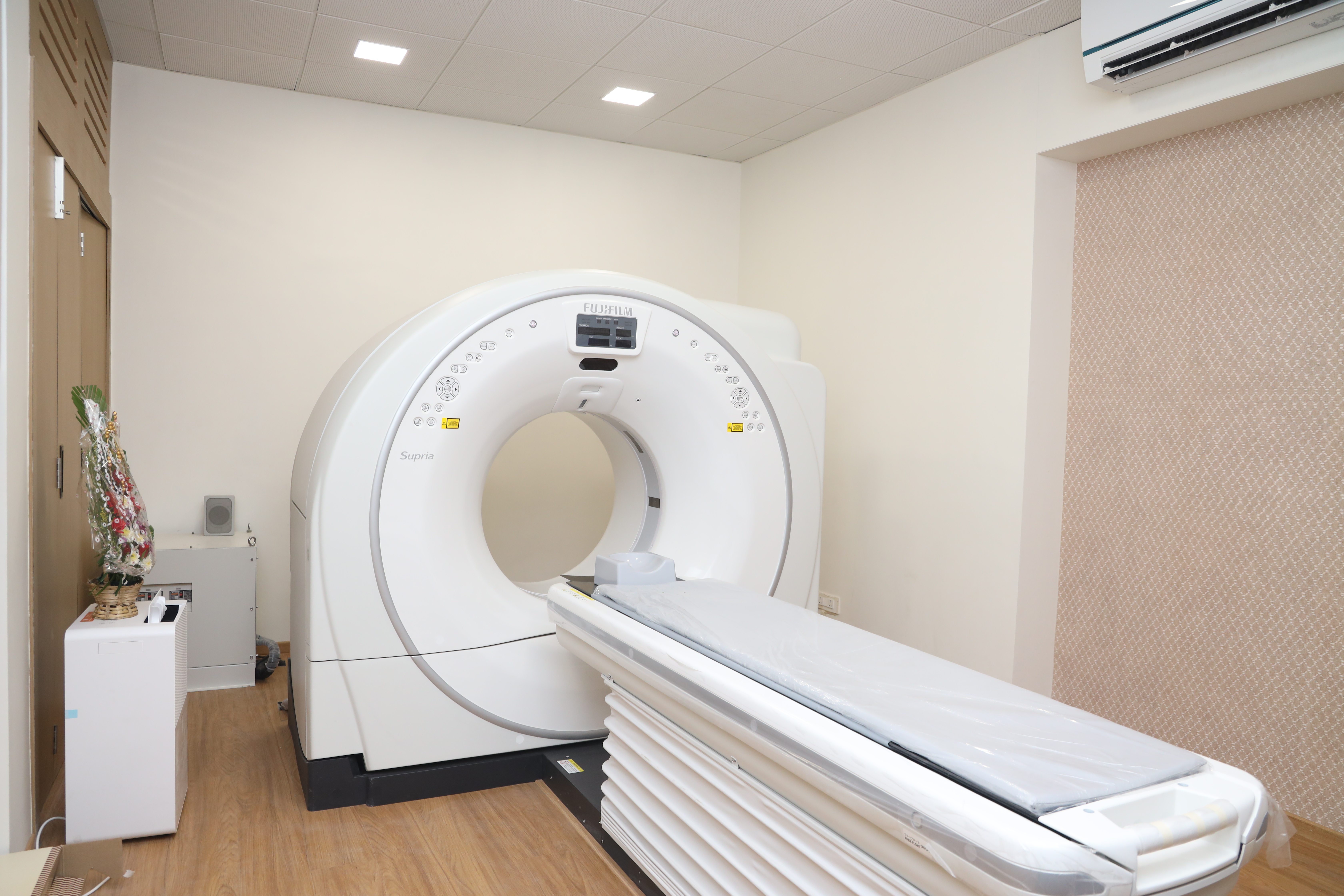
- You lie on the CT table, which moves through a short, wide ring rather than a long tunnel, and hold your breath for a few seconds at a time.
- As the contrast goes in, you may feel a warm flush, notice a metallic taste or feel as if you are passing urine. This is common and passes within a minute or two. Tell the team straight away if you feel itchy, breathless or unwell, or if your arm becomes painful or swollen around the cannula.
- You usually wait about 15-30 minutes after the injection before the cannula is removed. Sedation is not normally needed, so you can then eat and return to your usual day. Drink extra water unless your doctor has asked you to limit fluids.
Contrast safety, radiation and pregnancy
Iodine-based CT contrast is used very widely, and most people have no problem with it. Mild reactions such as itching, a rash or nausea are uncommon and usually settle quickly; serious reactions are rare. You are watched for a short time after the injection so that any reaction can be treated promptly. If a rash or itching appears later, even a day or two after the scan, contact us or your doctor.
- Kidneys: if your kidney function is already significantly reduced, contrast can occasionally reduce it further, which is why creatinine may be checked. Your doctor may then suggest extra fluids, a plain scan or a different test.
- Previous contrast reaction: your doctor and our radiologist decide together whether to give contrast, give medicines beforehand or choose a different test.
- Thyroid: the iodine in contrast can interfere with radioactive iodine treatment or a thyroid scan for several weeks.
- Radiation: a CT abdomen and pelvis gives a dose roughly equal to a few years of natural background radiation, and a multiphase scan gives more. When your doctor has asked for the scan, its benefit usually outweighs this small risk, and the dose is kept as low as reasonably achievable.
- Pregnancy: abdominal CT passes directly through the womb, so it is usually avoided in pregnancy unless essential; ultrasound or MRI is often used instead. If you might be pregnant, or your period is late, tell the team before the scan.
- Breastfeeding: most mothers can carry on breastfeeding as usual after CT contrast.
CT abdomen and pelvis at AV Scan
To book, send your prescription on WhatsApp. Our team replies with your preparation, the exact price and a slot.
- Reported by Dr. Avinash Bansal, MD (Radiology), FMF (UK) certified, who compares your scan with earlier scans when you bring them
- Multi-slice CT scanner, with plain, CECT and triple-phase abdominal protocols
- Most reports the same day, sent to your WhatsApp; urgent findings are passed on to your referring doctor
- Cashless with most major insurers and TPAs; empanelled for CGHS, ECHS and MJPJAY (our team confirms your cover)
- Ultrasound, MRI (including MRCP), blood tests and guided biopsy are also done here if you need a next step
- Open Mon-Sat 8am-10pm and Sun 8am-5pm; ground floor, step-free, near Shivaji Park and Siddhivinayak Temple