At a Glance
| Also called | Sono-HSG, SSG, sonosalpingography, HyCoSy, saline sonography, tube test |
|---|
| Performed and reported by | Dr. Vaishnavi Bansal, MD Radiology |
|---|
| Radiation | None: ultrasound only, no X-rays |
|---|
| When in your cycle | After your period ends and before ovulation, usually about day 6-11; confirmed on WhatsApp |
|---|
| Preparation | No chance of pregnancy, no pelvic infection, no fasting; exact preparation confirmed on WhatsApp |
|---|
| Time in the room | Usually about 15-30 minutes |
|---|
| Report | Most reports the same day, sent to your WhatsApp |
|---|
| Price | Confirmed on WhatsApp before your visit |
|---|
| Insurance | Cashless with most major insurers/TPAs; CGHS, ECHS, MJPJAY (fertility-test cover varies) |
|---|
What Sono-HSG shows
The test has two parts. First, sterile saline (salt water) gently fills the uterus to show its lining. On its own this is called saline sonography (SIS). Then a fluid with tiny bubbles, which shows up brightly on ultrasound, is followed along each fallopian tube. This part is HyCoSy (hysterosalpingo-contrast sonography).
Prescriptions may say Sono-HSG, SSG, sonosalpingography, HyCoSy, tubal patency test or tube test. If yours asks only for saline sonography, our team will confirm what is needed. The report describes:
- Inside the uterus: polyps, fibroids bulging into the cavity, scar tissue (adhesions), or a septum or other shape difference present from birth. For a shape difference, a 3D ultrasound or MRI may be suggested for more detail
- Each fallopian tube: whether the fluid flows along it and spills out near the ovary, which shows that the tube is open
- A swollen, fluid-filled tube (hydrosalpinx), if one is present
- The uterus wall and ovaries: fibroids, adenomyosis and cysts
What Sono-HSG cannot show
The test shows whether a tube is open. It does not show whether the tube's inner lining is healthy or working normally. It often cannot show scar tissue around the tubes and ovaries, or small patches of endometriosis. A tube can also look blocked when its muscle briefly tightens (spasm). A 'blocked' result may therefore need a repeat test, an X-ray HSG or a laparoscopy, as your gynaecologist decides. The tubes are one part of fertility checks, alongside ovulation, hormone blood tests and a semen test for the male partner.
When doctors request a Sono-HSG
It is usually requested by a gynaecologist or fertility specialist. Common reasons include:
- Difficulty conceiving: tests usually start after a year of trying, after six months if you are 35 or older, or sooner if there is a known problem
- Before IUI (intrauterine insemination), to confirm that the tubes are open
- A past pelvic infection, ectopic pregnancy, burst appendix or pelvic surgery, any of which can affect the tubes
- Repeated miscarriages, to check the shape of the uterine cavity
- A thick lining or possible polyp on a routine scan, or checking the cavity before IVF (the saline part alone may be enough)
Go to a hospital emergency department first if you have sudden severe pain low in the abdomen, heavy bleeding with dizziness, or pain or bleeding with a missed period or a positive pregnancy test. These can be signs of an ectopic pregnancy or a twisted ovary, which need urgent care.
Sono-HSG or X-ray HSG: what is the difference?
Both tests check whether the tubes are open. An X-ray HSG (hysterosalpingography) uses X-rays and iodine-based contrast, and shows the outline of each tube in more detail. A Sono-HSG uses ultrasound with no radiation, and also shows the uterus wall and ovaries in the same visit. It is an accepted alternative for checking the tubes, but an unclear result or planned surgery on the tubes may still need an X-ray HSG or a laparoscopy. Your gynaecologist chooses the test that suits you.
When to book and how to prepare
Our team confirms the exact preparation and date when you book on WhatsApp. As a general guide:
- Timing: after your period has fully stopped and before ovulation, usually around day 6 to day 11 of the cycle (day 1 is the first day of bleeding). If your cycles are irregular, follow your gynaecologist's advice. Message us on WhatsApp when your period starts so a date can be planned.
- The test is done only when there is no chance of pregnancy. Avoid unprotected intercourse from the first day of this period until the test. If there is any chance you could be pregnant, please tell us: a pregnancy test may be needed first, or the test can be moved to another day.
- The test is not done during a pelvic infection. Tell us before you come if you have a fever, pelvic pain, an unusual or foul-smelling discharge, or are still bleeding.
- Tell us if you have recently had a miscarriage, a D&C, a delivery or surgery on the uterus, or if you have a copper-T or other IUD in place, as the timing may need to change.
- Take a painkiller about an hour before only if your gynaecologist advises one, and take any antibiotics exactly as prescribed.
- You do not need to fast. Empty your bladder just before the test.
- Mention any allergies, including to latex, iodine-based antiseptic or painkillers, and the medicines you take.
- Wear a two-piece outfit and bring your prescription, previous reports and a sanitary pad.
What happens during the test
The test is done only with your consent, and you can ask to pause or stop at any time. Time in the scan room is usually about 15-30 minutes, and the fluid part lasts only a few minutes.
- A transvaginal ultrasound first checks the uterus and ovaries.
- A speculum is placed, as for a Pap smear. The cervix is cleaned with antiseptic and a thin, soft tube (catheter) is passed through it. The speculum is then removed.
- With the ultrasound probe in place, saline gently fills the cavity. The bubble fluid is then passed in slowly while Dr. Vaishnavi Bansal watches it flow along each tube.
- The catheter is removed, and you rest on the couch for a few minutes.
Is Sono-HSG painful? Safety and aftercare
Most women feel period-like cramps while the fluid passes. These usually ease within minutes, and a dull ache can last a few hours. A few women feel light-headed or faint for a short time, so you rest until it passes. There is no radiation.
A watery discharge and light spotting for a day or two are common. Use a sanitary pad rather than a tampon. Most women go back to normal activities the same day. Infection is uncommon. The risk is higher after a past pelvic infection or when a swollen tube (hydrosalpinx) is seen, which is why the test is not done during an infection and why your gynaecologist may prescribe antibiotics.
Contact your gynaecologist promptly, or go to a hospital emergency department, if you develop a fever, severe or worsening pain, heavy bleeding, or a foul-smelling discharge in the days after the test.
Your Sono-HSG at AV Scan, Dadar West
To book, send a photo of your prescription and the first day of your last period on WhatsApp +91 98200 51511, call the same number, or use our booking page.
- Performed and reported by Dr. Vaishnavi Bansal, MD Radiology, FMF (UK) certified, who looks after breast and women's imaging
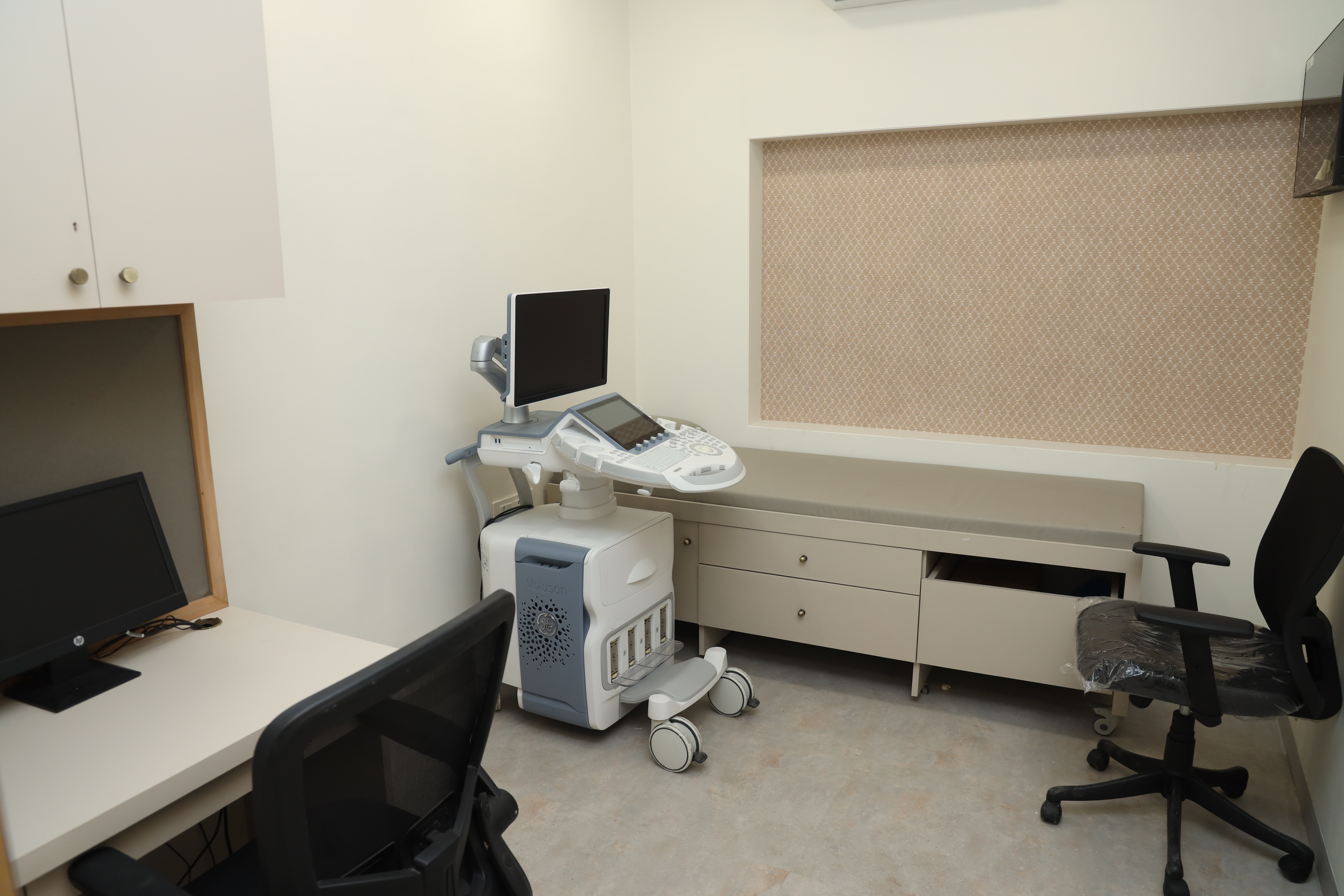
- Ultrasound systems at the centre: GE Voluson E10 and Philips Affiniti 70G
- The exact price is confirmed on WhatsApp before your visit
- Cashless with most major insurers and TPAs; empanelled for CGHS, ECHS and MJPJAY
- Open Monday to Saturday 8am-10pm and Sunday 8am-5pm; most reports the same day, sent to your WhatsApp
- Ground floor, step-free: Shilpa Apartment, Shankar Ghanekar Marg, Dadar West, Mumbai 400028, near Shivaji Park and Siddhivinayak Temple
Related tests at AV Scan
Tests often linked to a Sono-HSG:
- Pelvic ultrasound and TVS: fibroids, ovarian cysts, PCOS features and the lining
- Follicle study: scans across one cycle to track egg follicles and see whether ovulation happens
- MRI pelvis: more detail on the shape of the uterus, adenomyosis or endometriosis, if your doctor asks
- Early pregnancy scan: once your pregnancy test is positive
- Samples for blood tests your doctor asks for can be given at the centre